Building date: c. 1850
Original use:
Corner structures:
Mortar application and content:
Types and uses of stones:
Types and choice of windows:
Structures with similar masonry details:
Masons who worked on building:
Unique features: Octagon structure with a stucco exterior which appears to be over a cobblestone veneer.
Map views courtesy Google Maps. Address is Google Earth confirmed; 43°13'33.06"N 77°12'29.36"W.
Town of Williamson and Wayne County 1978 Highway Maps
"On the main highway, about a mile west of Williamson, is a large two story octagonal house, locally known as the Howard Sperry place. Each of the eight sides is seventeen feet 8 inches long. The exterior walls are built of cobblestones, twenty inches thick, but the cobblestones have been covered with a smooth plaster. The roof has a pitch of about thirty degrees and the peak is a high octagonal frame cupola with double hung windows on four sides. The porch across three sides is a later addition. The octagon is now owned by Lynn Falkey." The Octagon Fad, by Carl Schmidt, 1958 pages 95 and 96.
It has been an exciting, frustrating, and rewarding experience to research the history of Williamson's octagon house and some of its occupants. It has also been fantastic, frustrating, and rewarding experience to live in this house!
In December 2001, my husband, John, and I moved into Williamson's octagon house with our children -- Christopher, age 14, and Laura, age 12. Ten years later, on June 11, 2011, the house was included in the Williamson-Pultneyville Historical Society's house tour, titled "Doors to the Past: Cobblestone & Brick Tour of Homes." Prior to the tour, I did a lot of research on our house in order to create an informational display, and we spruced things up the best we could in four months. The floors on the main floor were stripped, varnished, and sealed; because of the toxic odor, we had to stay away for several days. The front porch was painted, and, of course, everything was cleaned as much as possible. With the help of friends and family, we welcomed many visitors and answered a multitude of questions about the house. It was fun and tiring, but the house was looking its best.
The walls of our house are 20 inches thick. The exterior is covered by stucco, but underneath it is cobblestone. We don't know why or exactly when the stucco was added. From what we can see at the base of some walls where the stucco has worn off, the cobblestones appear to be "field cobbles," although one source described them as "classic lake washed cobblestones." The ones that we can see are of various sizes and shapes, which is different than other cobblestone structures where the stones are uniform in size and arranged in neat patterns.
Our house is one of the eleven historic buildings on the Williamson coverlet, and it is called the S.P.W. Douglass Farmstead. I have discovered it would be more accurate to call it the Stephen Paddock Farmstead.
 Stephen Paddock William Douglass 1804-1872 |  Ursula Adelaide Shaff Douglass 1814-1899 | In the 1850 census, as well as in the 1860 census, Stephen Paddock William Douglass was living with his wife, Ursula Douglass (née Shaff), his four children (William, Walter, Joseph, and Emily), and his uncle, Stephen Paddock. It actually took quite a bit of digging, using the MyHeritage website and communicating on there with two descendants of Stephen Douglass (one whose name is Stephen Douglass!) to discover the relationship between the two Stephens. I eventually figured out that Stephen Douglass' mother, Chloe Douglass (née Paddock), had named Stephen after both his uncle and his father, William Douglass. |
The uncle, Stephen Paddock, was the farmer and the original owner of the property, which originally included 140 acres of fruit trees, as far as I can tell. Stephen Douglass was a teacher, and I assume he taught at the District #10 one-room schoolhouse because it was within walking distance of the house. It was located at the northwest corner of the intersection of Salmon Creek Road and Ridge Road and was known as the Ridge Chapel School. It was originally a cobblestone building that was torn down at an unknown time and rebuilt as a wooden structure. The structure is still there today on the Mason farm property, but it is in poor condition and has likely been used for storage for a long time.
Our octagon house may have been built as early as 1850, but it has been difficult to pin down the date of its origin. The heyday of octagon house-building in the United States was from the late 1840s through the 1860s, with the majority being built in the 1850s. Approximately 1,000 octagon buildings were built in the United States during this period, and most of them were in New York State. The octagon style of architecture became popular thanks to the writings of Phrenologist Orson Squire Fowler (October 11, 1809 - August 18, 1887). His book, The Octagon House: A Home for All, or A New, Cheap, Convenient, and Superior Mode of Building (also titled A Home for All, or The Gravel Wall and Octagon Mode of Building), was written in 1848 and revised in 1853. A 1973 reprint of the 1853 edition is still available under the title The Octagon House: A Home for All.
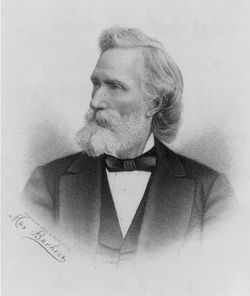 Orson Fowler 1809-1887 | Orson Fowler was most well known as a phrenologist, and he and his brother, Lorenzo Niles Fowler, had a phrenological office in New York City. Their sister, Charlotte, also eventually joined in on the phrenology movement, known as a pseudoscience. Much more about the Fowlers, phrenology, and octagon houses can easily be found in several online sources. |  | A phrenology bust that shows the sections of the brain. |
The octagon buildings that were built in the United States in the 1850s and 1860s included houses, barns, schools, and toll houses. If you search the Internet for octagon houses, you will find that some were very fancy and ornate, while some were quite plain. Mr. Fowler believed that the octagon shape was healthier and more efficient than other styles, with good ventilation, more windows, and more wide open spaces. He also wanted to make houses more affordable for the common man by using materials that were already available on the owner's property, such as stones and hardwood trees. Mr. Fowler himself had a "monumental" four-story, sixty-room octagon house in Fishkill, New York, with many "modern" conveniences, such as, "central heating, running water, indoor flush toilets, a roof cistern to collect rain water, natural gas lighting, and a water filtration system." (Amusing Planet) The house, unfortunately, is no longer standing. It was called "Fowler's Folly" and was dynamited in 1897 after being condemned as a public health hazard.
In the case of the Williamson octagon house, there was an abundance of stones on the property when it was built (and there are still plenty of them!). If we recall that, in ancient times, Ridge Road was once the shoreline of Lake Ontario (Glacial Lake Iroquois), it makes sense that there were so many stones that could be described as lake washed cobbles. It is also good to recall that the Erie Canal was completed in 1825, and many of the masons settled near it when their work on the Canal was completed. That explains why there were, and still are, many cobblestone buildings (approx. 900) in New York State, primarily near the Erie Canal. Wayne County alone has more than 150 cobblestone structures. So, our octagon house is historically significant not only because of its shape, but also because of the materials with which it was built.
I have copies of nine deeds, from when Stephen Paddock sold the property to Ursula Douglass in 1866 to our purchase in 2001. The owners, in order, were: Stephen Paddock (? - 1866), Ursula Douglass (1866-1884), William Z. Fish (1884-1904), Herbert L. Johnson (1904-1928), Sarah Sperry (1928-1947), Lynn L. Falkey (1947-1969), Lynn L. and Doris Falkey (1969-1974), Samuel and Marilyn Mercurio (1974-2001), and John and Anne L'Hommedieu (2001-the present). To throw a monkey wrench into all the facts, an old undated map of Williamson (that shows individual houses and the names of their owners), has S.P.W Douglass and S. Paddock living in separate houses.
Does our house prove Fowler's suppositions about octagon houses? It definitely has a lot of living space -- 2,784 square feet and many windows - a total of 33 plus 10 in the cellar. The main floor is wide open for air flow, with two doors that open onto the stairway to the second floor. All rooms except one on the second floor open into each other, and there is a walkway at the bottom of the spiral cupola stairs that opens to both sides of the house. There is plenty of room for air to flow unabated from the first floor to the cupola, and there are plenty of windows to let in lots of light. However, it is difficult to keep the house cool in the summer; we have at least one fan in every room. It has also been expensive to heat the house in the winter, although the new boiler and zoned heating have helped.
This year, 2022, is our twenty-first year of living in Williamson's octagon house. I have called this house "the money pit" almost since the moment we moved in because so much needed fixing. If it had ever been repaired, it was probably with duct tape, or so I tell people. When we bought the property, there was a 3-car garage that was irreparable, so we had it torn down and buried. There was also a migrant shack on the south side of the creek that was in shambles, as well as a building in the east corner on the north side of the creek with a cement floor. Both of those buildings have also been torn down.
In 2002, we rented a very large dumpster and dragged all sorts of farm equipment into it - both large and small pieces - and completely filled that dumpster with a large variety of debris. Since then, we have had to drag things like an old spray rig out to the edge of the road so that the metal collectors would find them. To this day, as we continue to work on clearing and caring for the acreage on the south side of the creek, we still find large pieces of metal, as well as un-decomposed items from a few locations where previous owners must have dumped their trash. During the summer of 2021, in fact, a metal-collector took a very large, rusty oil drum that John and I had rolled to the side of the road (it took forever ---- it was that large!). The metal collector agreed to take part of an old plow, an old engine, and an old truck bed, as well. That summer, we also collected, delivered, and paid for the recycling of 35 old tires of all sizes. Some tires had been there a very long time and had plants growing out of them. Just today, in fact, I found a bullet casing, a golf ball, two pieces of glass, and a large piece of fabric while trying to pull out some of the seemingly thousands of prickly vines and poison ivy vines that are everywhere in our section of the former apple orchard. It is a job that never ends, but we are trying to avoid clearing some of the land to the south because there are deer who live there.
We soon replaced the roof and thirty-eight windows (still seven more cellar windows to go). Eventually, we replaced all the appliances, bathroom fixtures, the water heater, and the boiler. We added a swimming pool where the garage used to be and installed a set of stairs on the west side of the front porch. We created a lot of gardens, both for flowers and for vegetables, and we took down old trees that were in bad shape and planted several new ones. Most recently, we had vinyl siding added to the cupola, had all the soffits encased in vinyl, rebuilt and enlarged the side porch/deck, repaired the back room (someone called it a sun room, but it was not original to the house) and had the kitchen totally remodeled. The house really doesn't have any storage space, so we use the back room and the space at the bottom of the cupola stairs. There is no attic except a crawl space.
During the ice storm of 2003, we had no power and wanted to use the fireplace in the living room for heat, but the cap on the chimney was frozen shut. So, the four of us went up to the cupola, tied a sturdy rope around 15-year-old Chris' waist, opened the window on the west side, gave Chris a long stick, and lowered him far enough to reach the chimney with the stick to break up the ice. Years later, we still can't believe we did that.
Is this big, old house haunted? Well, you never know. Laura described this 2011 incident: "It was the year that we fixed up and showed the house during the summer tour. My iPod Touch was on the speaker dock when all of a sudden it stopped playing. This was odd because someone would've had to press pause on the touch screen. I pressed play again, and moments later it happened again. The music stopped. This happened once more before I said out loud, 'Ok, if you're there, press play.' However, the room remained silent. This was most likely a fluke, but maybe it was a ghost."
Chris also mentioned sometimes hearing footsteps that were inexplicable. Sometimes, I have heard music at night while lying in bed. It is faint, so I don't know the tunes, but it has happened several times. Other times, I have been sitting in the living room and have heard footsteps overhead, even though I'm the only person in the house. This happened once while I was on a Zoom meeting with Amber Linson and Sandi Hamilton. Very weird. There was another time when a lady was here for us to sign some documents. It turned out that she was a psychic or medium. She spoke of my parents being in the room. I believed it for a few days, but later decided it was nonsense. It is certainly possible that this house is haunted because at least Stephen Paddock, the original builder/owner, died here one month after selling it to Ursula Douglass.
The Douglass family moved to Douglass, Kansas, in 1884. I have communicated with the Douglass Historical Society, and it was Joseph Douglass, a relative of the Douglass family, who first settled the town, having moved there after the Civil War.
I recently communicated with Jean Falkey Heffernan, who grew up in the house and was a 1966 graduate of Williamson Central School. Some of her thoughts were illuminating. She said it was originally 140 acres and included 13-14 structures, including three 2-story houses, a one-room house, a 3-car garage, 2 barns, and several smaller outbuildings. Jean described the outside of the house as "cobblestone [that] was flat and stuck on some type of slats randomly, then chicken type wire was placed over that and the stucco over that." Her family thought the house had originally been built that way. Jean said her father held the mortgage for the next owner who started selling off pieces of the land before he even owned it. It's my guess that this property originally extended all the way west to Eddy Ridge Road, on both the north and south sides of the creek that runs through the property _ Salmon Creek. There remain only 5.5 acres of former farmland attached to the house.
I still don't have solid answers to my two major questions regarding the date the house was built and when the stucco was added, although I'm leaning toward it being built in 1850 and stucco applied as part of the original construction. Many thanks to the people who have helped me so far - Chester Peters (former Williamson Historian), Perry Howland (current Williamson Historian), Peter Evans ([Former, deceased 3/11/2023] Wayne County Historian), Nanette Peters Hance (W-PHS President), Dan Montondo (W-PHS artifacts cataloger), Gail McCarthy (co-chair of the 2011 W-PHS house tour), Ken and Katie Artl (Ken being somewhat of an authority on cobblestone houses), Robert Kline (of the www.octagon.bobanna website), Katherine Blair (of the Douglass Historical Museum in Kansas), and Jean Falkey Heffernan.
Citations:
Amusing Planet. https://www.amusingplanet.com/2021/03/the-octagon-houses-of-orson-fowler.html. April 26, 2022.
Blair, Katherine. "Re: Douglass Settlers." Received by Anne L'Hommedieu, 20 April, 2022.
Fowler, Orson Squire. The Octagon House: A Home for All. New York : Dover Publications, 1973 (an unabridged republication of the original 1848 version).
"Octagon House." Wikipedia. https://en.wikipedia.org/wiki/Octagon_house
"Orson Squire Fowler." Wikipedia. March 2022. https://en.wikipedia.org/wiki/Orson_Squire_Fowler
Over, Danielle. "The Octagon House Was Not a Square." Hoffman paper, 1982.
"Stephen Paddock." Find a Grave. March 2022. https://www.findagrave.com/memorial/136493760/stephen-paddock
"Stephen Paddock William Douglass." Find a Grave. March 2022. https://www.findagrave.com/memorial/86352050/stephen-paddock_william-douglass
Anne L'Hommedieu email 11/28/2025, included this article she wrote for the Wayne County Bicentennial (2023) book, Voices of Wayne County
"Inventory of Older Octagon, Hexagon, and Round Houses, NEW YORK Counties N to Z". Accessing a portion of an educational website, Bobanna Website, by R. Kline and Ellen Puerzer. To locate information on this cobblestone octagon structure, scroll or search for Wayne County and scroll to · Williamson. Octagon House. Built in 1864. Possibly before. As early as 1850. Located at 3628 Ridge Road West. Courtesy Robert Kline and E. Puerzer.
Editor's Note: Statement on website: This site is copyrighted (c) 2002, 2016-17 by Robert Kline, and developed and maintained by Robert Kline and Ellen Puerzer. Many photos are copyrighted or controlled. Please mention this site if using any of the information contained herein. Write for permission to use photos and you'll be directed to copyright owner. Please send e-mail to either R. Kline or E. Puerzer.
Wayne Historians Organization (WHO), Historic Sites Inventory Cobblestone house
(WHO), Historic Sites Inventory Website
This is extremely interesting. I've driven past the Williamson Octagon House (on old Ridge Rd.) many times & always so pleased to see this remarkable building. I also thought, "Hmm - I wonder what's underneath that stucco veneer??"
From info [provided to-date] and Gene Bavis' Wayne Co. History Website - it appears that it's of cobblestone construction. Which would likely mean the 20-inch thick walls of the house are of rubble stone construction and have a finished surface of cobblestone - yes?
I read the current owner's detailed & lengthy description of the house. She mentions that some of the stucco has worn away & you can now see some of the cobblestone exterior, that survives, underneath. She also describes the stones used for the cobblestone veneer are of unmatched sizes - described as "field cobbles." Question: are these stones laid in horizontal rows, as seen in most cobblestone houses? This isn't mentioned in the description. If they're not laid in horizontal rows - but, instead, are in a random pattern - would that still qualify the Octagon house construction as "cobblestone?" Whenever a building has exterior walls of random-laid stone (not horizontal rows), it's not usually considered to be "cobblestone construction."
Stucco exterior of the Octagon house - the application of stucco as a veneer on buildings is a practice that began in the 19th century & continued into the early 20th century. During a 1990s inventory of historic buildings in the town of Gorham, Ontario Co., I saw at least a half-dozen Greek Revival houses (originally with wood clapboard siding) that had been "updated" with a stucco veneer. In fact, several of these houses have the date the veneer was applied. The date is etched into the stucco on the façade! These examples of stucco veneer all date from the 1920s.
During the 1920s, the application of stucco to "old buildings" (mostly clapboard) was widely publicized in popular magazines. The Landmark Society has a copy of a 1922 "Better Homes & Gardens" magazine that has an extensive article - with many "before" and "after" photos - showing "old fashioned" (19th-century) houses, that have been "modernized" with a new stucco veneer. The addition of a stucco veneer was advertised as a way to achieve a "maintenance-free house!" Same advertising the aluminum & vinyl siding industry uses, today, a hundred years later. Cynthia Howk email 11/28/2025.
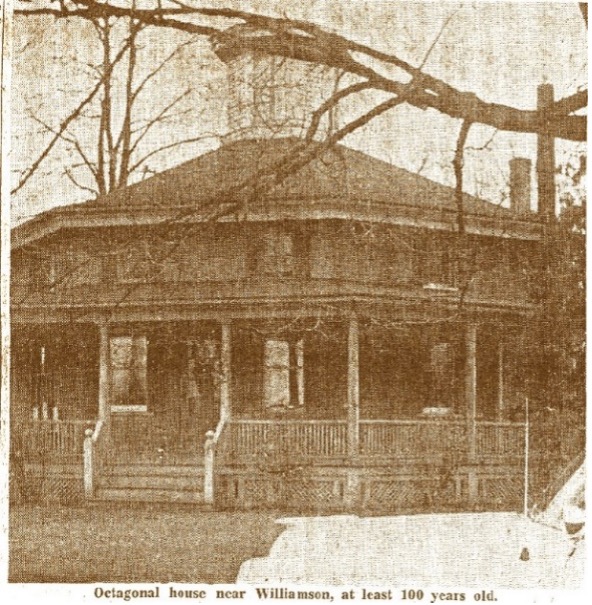 Picture1.jpg ¹ | 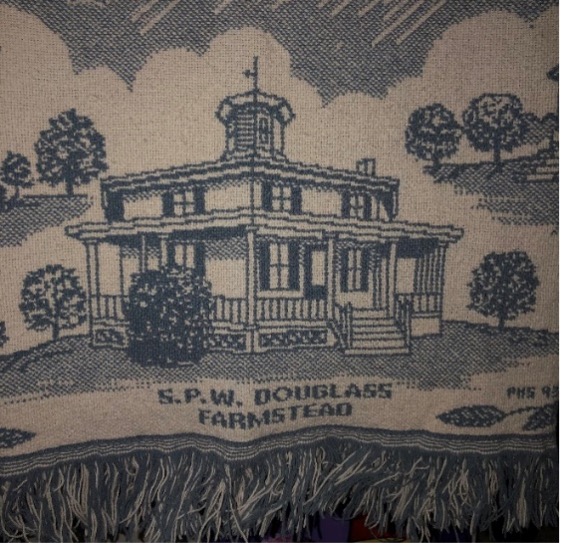 Picture3.jpg ¹ |  Octagon House circa 1920s_A.jpg ¹ |  Picture2.jpg ¹ |
 June 24, 2023 - bushes removed_A.jpg ¹ |
¹ Imagery courtesy Anne L'Hommedieu.
